
A Tennessee DUI stop does not automatically give police authority to search your car. A vehicle search usually requires a warrant or a recognized exception to the warrant requirement, such as voluntary consent or probable cause under the automobile exception. Other rules may apply after an arrest, when officers see evidence in plain view, or when a lawfully impounded vehicle is inventoried.
Best and Brock represents drivers in Chattanooga, Hamilton County, East Tennessee, and nearby communities when DUI investigations raise questions about traffic stops, vehicle searches, field sobriety testing, chemical testing, and other evidence. Whether a specific search was lawful depends on the facts leading up to the search, what officers knew at the time, the legal justification they relied on, and how far the search went.
A lawful DUI stop does not automatically make a later vehicle search lawful.






A DUI Stop Does Not Automatically Give Police the Right to Search Your Car 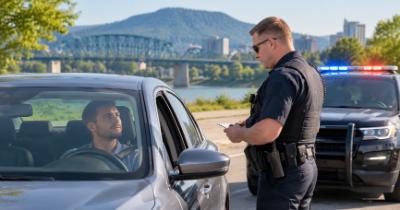
A traffic stop and a vehicle search are separate legal events. Police need a lawful basis for the stop, and they also need legal authority for a search.
During a suspected DUI stop, an officer may ask for your driver’s license, vehicle registration, and proof of insurance. The officer may ask where you are coming from, whether you have been drinking, or whether you have taken medication. The officer may also observe your speech, coordination, movements, driving behavior, and other circumstances while deciding whether to continue the DUI investigation.
Those observations do not automatically give the officer permission to search your vehicle.
Best and Brock explains related roadside issues in its guide to your rights when pulled over for suspected DUI in Tennessee:
https://www.bestlawhb.com/rights-when-pulled-over-for-suspected-dui/
When Can Police Search a Car Without a Warrant?
The Fourth Amendment protects against unreasonable searches and seizures. A warrant is one way police may obtain authority to search, but courts recognize exceptions that can permit a warrantless vehicle search.
Depending on the facts, police may rely on:
- Your voluntary consent
• Probable cause under the automobile exception
• A search incident to a lawful arrest in limited circumstances
• Plain-view principles when officers lawfully observe evidence and have a lawful right of access to it
• A lawful inventory search after impoundment
• Another recognized exception supported by the circumstances
The existence of an exception does not make every search valid. A DUI lawyer can examine whether the claimed legal basis existed and whether officers stayed within the lawful scope of the search.


What Happens If an Officer Asks for Consent?
An officer may ask, “Can I search your car?” You generally do not have to agree.
If you voluntarily consent, your consent may provide legal authority for the search. The exact words and circumstances can matter. Questions may include whether consent was freely given, whether the officer suggested that you had no choice, what areas you agreed could be searched, and whether you limited or withdrew consent.
You can state calmly, “I do not consent to a search.” You do not need to argue about the law at the roadside. If an officer searches anyway, do not physically interfere. An attorney can later examine the officer’s stated legal basis and the circumstances shown by reports, body-camera footage, dash-camera footage, and other evidence.
For more information about consent and police searches, visit:
https://www.bestlawhb.com/do-you-have-to-let-an-officer-search-you/
Can Probable Cause Allow Police to Search Your Vehicle?
Yes. Under the automobile exception, police may conduct a warrantless vehicle search when they have probable cause to believe the vehicle contains contraband or evidence of a crime.
In a DUI investigation, officers might rely on facts such as an open alcohol container, suspected drugs, drug paraphernalia, statements made by an occupant, or other observations. The scope of the search still matters. If probable cause supports a vehicle search, police may generally search areas and containers where the object of the search could reasonably be located.
Probable cause is evaluated from the totality of the circumstances. A defense lawyer can review what officers knew before the search began and whether those facts supported the areas they searched.

- Jeremy Forgey
- Chris Griffin
Does a DUI Arrest Let Police Search the Entire Passenger Compartment?
No. A DUI arrest does not create unlimited authority to search a vehicle.
Under Arizona v. Gant, police may search a vehicle incident to a recent occupant’s arrest when the arrested person is unsecured and within reaching distance of the passenger compartment at the time of the search. A search may also be permitted when it is reasonable to believe the vehicle contains evidence of the offense of arrest.
In a DUI case, officers may argue that alcohol containers, drugs, medication, or other evidence related to the suspected impairment could be inside the passenger compartment. Whether that justification supports a particular search depends on the circumstances, including what happened before the arrest, what officers observed, and which areas of the vehicle were searched.
Other exceptions may also apply. The fact of arrest alone does not authorize a complete search of every part of the vehicle.
Can Police Search Based on Something They See Through the Window?
Sometimes. The plain-view doctrine can permit police to seize evidence without a warrant when an officer is lawfully in a position to see the item, its incriminating character is immediately apparent, and the officer has a lawful right of access to it.
For example, an open container or suspected contraband visible from a lawful vantage point may become part of the probable-cause analysis. Seeing an item through a window does not, by itself, give police unlimited authority to enter the vehicle or search unrelated areas.
The sequence matters. Plain view cannot validate an unlawful entry that occurred before the officer observed the item.
Penalties for a DUI Conviction Cost of a DUI LawyerRelated Videos
What About a Drug Dog During a DUI Stop?
A dog sniff around the outside of a vehicle raises different Fourth Amendment issues from a physical search of the interior.
Under Rodriguez v. United States, police generally cannot add time to a traffic stop for a dog sniff unless they have an independent lawful basis, such as reasonable suspicion, to extend the detention. The key question is whether the dog sniff prolonged the stop beyond the time reasonably needed to handle the mission of the traffic stop.
If a trained and reliable drug-detection dog alerts during a lawful detention, police may argue that the alert establishes probable cause to search the vehicle. Courts evaluate probable cause under the totality of the circumstances, and the dog’s training, certification, reliability, and the circumstances of the alert can become relevant.
Timing can be critical when determining whether the DUI investigation was still underway or whether the stop was extended for a separate drug investigation.
Best and Brock discusses dog sniffs during traffic stops here:
https://www.bestlawhb.com/stop-and-sniff/
Can Police Search an Impounded Car?
A lawful impoundment may lead to an inventory search. Inventory searches are generally used to document property in a vehicle, protect belongings, and account for items in police custody.
A valid inventory search should follow standardized departmental procedures that limit officer discretion. It should not be used as an unrestricted evidence search. A defense lawyer may examine:
- Why the vehicle was impounded
• Whether the impoundment was lawful
• Which written policy or standardized procedure applied
• Whether officers followed that procedure
• How officers handled closed containers or other areas of the vehicle
• Whether the stated inventory purpose matches what occurred
Does Tennessee Implied Consent Mean You Consented to a Car Search?
No. Tennessee’s implied-consent law concerns breath and blood testing for alcohol or drugs under specified circumstances. It does not provide blanket consent for police to search every part of your vehicle.
Tennessee Code Annotated section 55-10-401 addresses driving under the influence. Tennessee Code Annotated section 55-10-406 addresses breath and blood testing procedures and implied consent related to alcohol or drug testing.
Consent to chemical testing and consent to a vehicle search are separate legal issues.
For broader information about Tennessee DUI investigations, visit:
https://www.bestlawhb.com/dui-frequently-asked-questions/
What Should You Do If Police Search Your Car Anyway?
You can protect your rights without turning a roadside encounter into an argument.
- Stay calm and keep your hands visible.
• Follow lawful safety instructions.
• If asked for permission to search, state clearly that you do not consent.
• Do not physically block an officer or interfere with the search.
• Do not try to hide, move, destroy, or remove items.
• Avoid volunteering explanations about what may be inside the vehicle.
• After the encounter, write down the sequence of events while your memory is fresh.
• Note whether the officer requested consent, what you said, whether a dog was used, and when the search began.
• Preserve videos, photographs, location data, tow records, receipts, messages, and witness information that may help establish the timeline.
A roadside disagreement is not the place to litigate whether a search is lawful. The legality of the search can be reviewed later using the available evidence.
Can Evidence From an Illegal Search Be Suppressed?
Potentially. If police obtained evidence through an unconstitutional search, a defense attorney may file a motion asking the court to suppress that evidence.
Suppression can matter when prosecutors rely on alcohol containers, drugs, medication, paraphernalia, or other objects found in the vehicle. Whether evidence is excluded depends on the facts, the legal violation, and any exceptions to the exclusionary rule that may apply.
Suppression of vehicle evidence also does not automatically end every DUI case. The State may still rely on other evidence, including driving observations, statements, roadside sobriety tests, chemical testing, video, or witness testimony.
How a Chattanooga DUI Lawyer Can Review a Vehicle Search
A Chattanooga DUI lawyer can examine the complete sequence of the stop rather than looking at the search in isolation. Relevant evidence may include:
- The officer’s stated reason for the traffic stop
• The length and scope of the detention
• Statements attributed to the driver or passengers
• Requests for consent and the driver’s response
• Body-camera and dash-camera footage
• Probable-cause claims
• Drug-dog deployment and timing
• The arrest sequence
• Tow and impound records
• Inventory-search policies
• The areas and containers officers searched
• Evidence collected before, during, and after the search
Best and Brock represents people facing DUI charges in Chattanooga, Hamilton County, East Tennessee, and nearby areas. Attorney Matt Brock focuses primarily on impaired-driving defense and is certified as an instructor in DUI Detection and Standardized Field Sobriety Testing.
Learn more about the firm’s Chattanooga DUI practice:
https://www.bestlawhb.com/chattanooga-dui-lawyers/
Learn more about Matt Brock:
https://www.bestlawhb.com/attorney-matt-brock/
Talk With a Chattanooga DUI Lawyer About a Vehicle Search
If police searched your vehicle during a DUI stop in Chattanooga, Hamilton County, East Tennessee, or a nearby community, the search should be evaluated in the context of the entire encounter. A lawful traffic stop does not automatically make every later search lawful.
Best and Brock can review the stop, detention, search, arrest, video, testing evidence, and other circumstances that may affect your case. The goal is to identify what happened, determine which legal rules may apply, and help you understand your options.
Call 423-829-1043 or request a consultation:
https://www.bestlawhb.com/contact-us/
This article is for general informational purposes only. It is not legal advice, does not create an attorney-client relationship, and should not replace advice from an attorney about your specific situation.

|
|
|