
Being charged with disorderly conduct after a concert or festival in Chattanooga often comes down to heated moments in crowded environments. These charges can stem from arguments, fights, loud behavior, resisting police instructions, or misunderstandings in chaotic settings. While disorderly conduct is usually a misdemeanor in Tennessee, it can still lead to jail time, fines, and a criminal record. This article explains how these charges happen, what they mean under Tennessee law, and how Best and Brock helps people protect their rights after an arrest in Hamilton County and surrounding areas.





What Disorderly Conduct Means in Tennessee 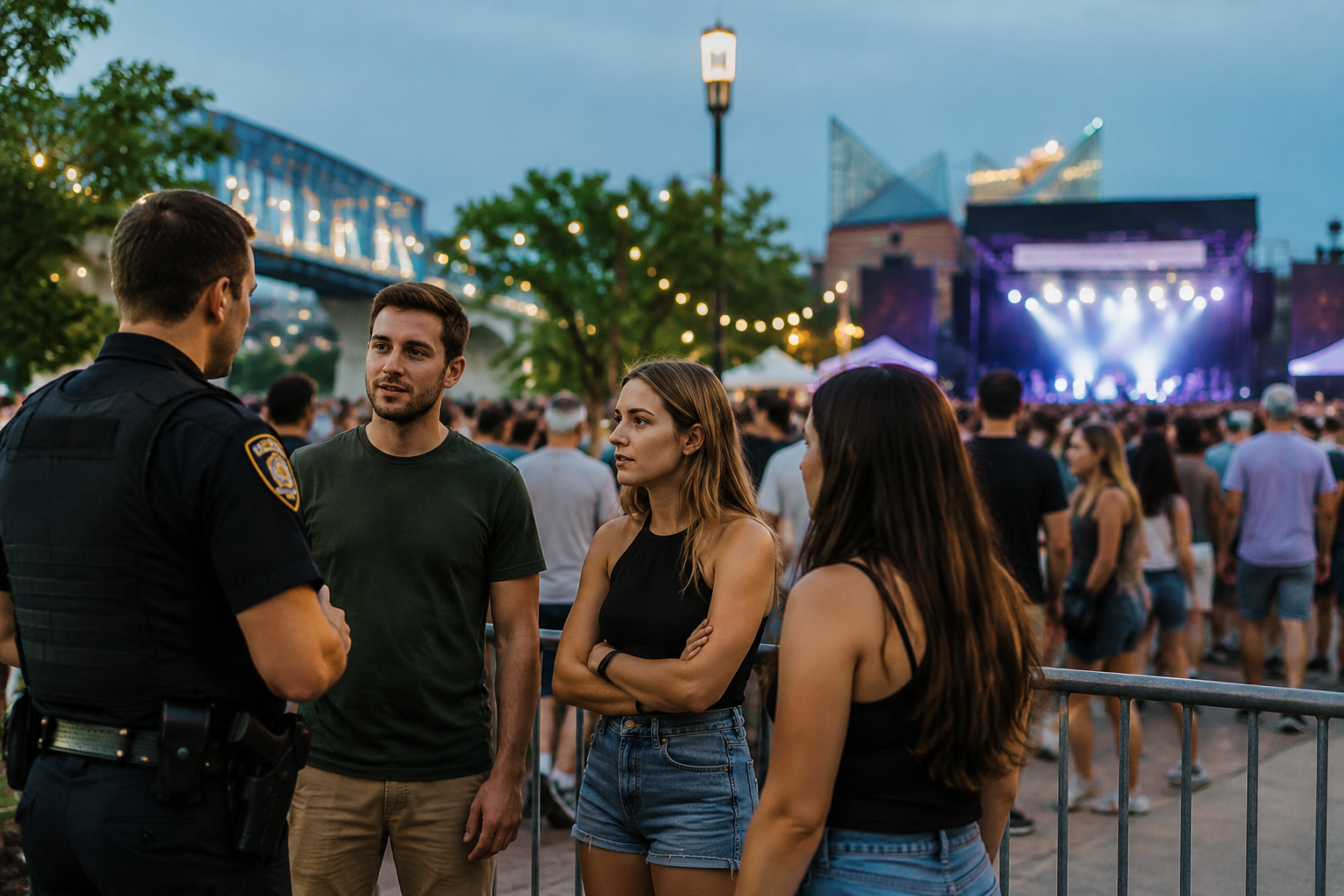
Disorderly conduct is a broad charge in Tennessee that covers behavior police believe disturbs public peace or safety. At concerts and festivals in Chattanooga, these situations often escalate quickly due to crowds, alcohol, noise, and limited space.
Under Tennessee law, disorderly conduct can include actions such as:
- Fighting or threatening violence in public
- Making excessive noise after warnings
- Refusing to comply with lawful police instructions
- Creating a hazardous or disruptive situation
- Blocking public passage or emergency response
At large events like Riverbend Festival or other Chattanooga-area concerts, law enforcement is especially sensitive to crowd control. What starts as a disagreement can quickly turn into an arrest if officers believe public safety is at risk.


How Concert and Festival Arrests Typically Happen
Most disorderly conduct arrests at events do not begin as criminal situations. They often develop from misunderstandings or escalating tension.
Common scenarios include:
- Arguments between attendees that draw attention from security
- Alcohol-related misunderstandings or verbal disputes
- Refusing to leave an area when instructed by event staff or police
- Crowd surges where officers interpret movement as aggressive behavior
- Recording or interacting with law enforcement during an active situation
In many cases, multiple people may be detained even if only one individual initiated the conflict. This is why details matter so much when building a defense.
To understand what to do immediately after an arrest, see:
https://www.bestlawhb.com/what-to-do-when-someone-has-been-arrested/
Penalties for Disorderly Conduct in Chattanooga
In Tennessee, disorderly conduct is generally charged as a Class C misdemeanor. While that is the lowest level of criminal offense, the consequences still matter.
Potential penalties include:
- Up to 30 days in jail
- Fines up to $50
- Court costs and administrative fees
- Probation or community service
- A permanent criminal record
Even if jail time is not imposed, the record itself can affect employment, housing applications, and background checks. For people attending festivals, students, or young professionals, the long-term impact can be more serious than expected.

- Jeremy Forgey
- Chris Griffin
Why These Charges Are Often Misunderstood
Disorderly conduct cases are highly fact specific. Officers at crowded events often make rapid decisions based on limited information. That can lead to charges that do not fully reflect what actually happened.
Key issues that frequently arise include:
- Conflicting witness accounts
- Lack of clear video evidence
- Overreaction to non-violent behavior
- Miscommunication during police instructions
- Group behavior being treated as individual wrongdoing
In some cases, people are charged simply for being near a disturbance, even if they did not actively participate.
Defenses to Disorderly Conduct Charges
There are several possible defenses depending on the facts of the case. An experienced criminal defense attorney will look closely at how the arrest occurred, what officers observed, and whether your rights were respected.
Should I Plead Guilty? Choosing a Criminal Defense LawyerRelated Videos
Common defenses include:
Lack of Intent
You did not intentionally cause a public disturbance or act in a disruptive way.
Free Speech Protection
Certain verbal conduct may be protected under constitutional rights, depending on context.
Insufficient Evidence
Police reports may not clearly support the claim that your actions disrupted public peace.
Unlawful Arrest
If officers lacked probable cause, the charges may be challenged.
Misidentification
In crowded environments, officers may mistakenly identify the wrong person.
Understanding how intent and perception play into these cases is critical. More on related legal concepts can be found here:
https://www.bestlawhb.com/what-is-a-true-threat/
Festival and Concert Context Matters
Context is one of the most important factors in disorderly conduct cases. A behavior that seems disruptive in isolation may be viewed differently in a loud, crowded festival setting.
For example:
- Shouting over loud music may be misinterpreted as aggression
- Moving through a dense crowd quickly may appear confrontational
- Emotional reactions during disputes may escalate police involvement
- Alcohol consumption can influence how behavior is perceived
Law enforcement must still follow legal standards, but context often shapes whether charges are filed and how they are prosecuted.
Related Offenses That May Be Charged Alongside Disorderly Conduct
In some situations, disorderly conduct may be combined with or confused with other charges such as:
- Reckless endangerment
- Harassment
- Resisting arrest
- Threat-related offenses
Each charge carries different legal standards and penalties. For example, reckless endangerment focuses on alleged risk of harm, not just disruptive behavior. Learn more here:
https://www.bestlawhb.com/what-does-reckless-endangerment-mean-in-tennessee/
Protecting Your Rights After an Arrest
What happens immediately after an arrest can affect the outcome of your case. Many people unintentionally make mistakes that complicate their defense.
It is important to:
- Remain calm and avoid further confrontation
- Request legal representation as soon as possible
- Avoid discussing the case in detail with law enforcement
- Document what you remember about the incident
- Preserve any videos, messages, or witness information
Even small details can make a difference in building a strong defense strategy.
The Importance of Early Legal Action
Disorderly conduct charges may seem minor at first, but they can escalate quickly if not handled properly. Early legal intervention allows your attorney to:
- Review police reports for inconsistencies
- Identify witnesses before memories fade
- Challenge weak or unsupported allegations
- Work toward dismissal or reduction of charges when possible
Taking action early can significantly impact how the case resolves.
How Best and Brock Helps Clients in Chattanooga
Best and Brock represent individuals facing criminal charges across Chattanooga and Hamilton County. The firm understands how quickly situations at concerts and festivals can escalate and how often charges result from misunderstandings.
Their approach focuses on:
- Careful review of arrest details
- Strategic defense tailored to each case
- Protecting clients’ records and futures
- Clear communication throughout the process
Whether the case involves a misunderstanding, a crowd-related incident, or a disputed arrest, having experienced representation matters.
If you were charged with disorderly conduct after a concert or festival in Chattanooga, you do not have to face the process alone. Best and Brock offer guidance and representation to help you understand your options and protect your rights. Contact the firm for a consultation.
Disclaimer
This article is for informational purposes only and is not legal advice. Consult an attorney about your specific situation.

|
|
|