
If a distracted driver injured you during summer break in Chattanooga, useful evidence may include proof of distraction, proof of fault, and records showing how the crash affected your health, income, transportation, and daily life. Scene photographs, witness statements, police reports, nearby video, cell phone records, vehicle data, medical records, wage documents, and a written recovery journal may all help support a claim.
Some evidence can disappear within days. Best and Brock can investigate the crash, identify records that may need to be preserved, communicate with insurers, and explain the deadlines that may apply to your case.
Summer travel can increase traffic around downtown Chattanooga, Interstate 24, Interstate 75, local attractions, shopping areas, and routes throughout Hamilton County. Visitors, road trips, family outings, teen drivers, and drivers using navigation apps may create added opportunities for distraction. A driver may look at a text, adjust directions, record a video, reach for food, or turn toward passengers for only a moment.
Digital evidence can disappear quickly. Early action may protect records that help show what happened before, during, and after the collision.







What Counts as Distracted Driving in Tennessee?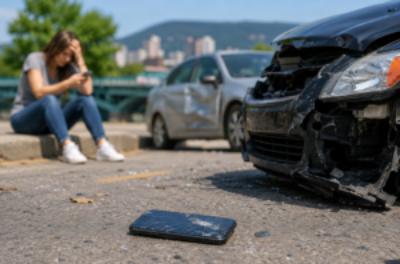
Distracted driving includes more than texting. It can involve any activity that takes a driver’s eyes, hands, or attention away from operating a vehicle safely.
Common examples include:
- Reading or sending text messages
- Holding a phone during a call
- Using social media
- Recording or watching video
- Entering information into a navigation app
- Eating, drinking, or reaching for an item
- Turning to speak with passengers
- Adjusting music, climate, or vehicle controls
The National Highway Traffic Safety Administration describes distracted driving as an activity that diverts attention from driving. Examples include phone use, eating, talking with passengers, and adjusting navigation or entertainment systems.
Tennessee Code Annotated section 55-8-199 generally prohibits a driver from physically holding or supporting a wireless telecommunications device with any part of the body while operating a vehicle on a Tennessee road or highway. The law also addresses reading or sending text-based communications, watching or recording video, and certain other device uses. Exceptions and specific conditions may apply.
A citation for violating Tennessee’s hands-free law may support an injury claim, but a civil case does not depend on a citation alone. The central questions usually include whether the driver failed to use reasonable care and whether that conduct caused the crash and your injuries.


Why Distracted Driving Evidence Can Be Difficult to Find
A distracted driver may deny using a phone. An officer may not mention distraction in the crash report. A witness may leave before law enforcement arrives. A nearby camera may record the collision but automatically delete the footage within days or weeks.
Phone, app, and cloud data may also be overwritten, deleted, or difficult to obtain without formal legal procedures. Vehicle information can be lost if a car is repaired, sold, salvaged, or destroyed.
A single item may not prove distraction by itself. Several pieces of evidence can become more persuasive when they support the same timeline. A witness who saw the driver looking down, a text sent near the time of impact, delayed braking shown on video, and vehicle data showing no braking before the collision may point toward the same conclusion.
Evidence From the Crash Scene
Your health and safety come first. Seek medical assistance and move away from traffic when necessary. Do not place yourself in danger to collect evidence.
When your condition allows, take wide and close photographs before vehicles are moved. Capture:
- The position of each vehicle
- Damage to every side of the vehicles
- Skid marks, debris, broken glass, and fluid
- Traffic lights, signs, lane markings, and intersections
- Weather, lighting, road conditions, and visibility
- Nearby businesses, homes, parking lots, and cameras
- Visible injuries
- License plates and identifying vehicle details
A short video may show traffic flow, lighting, roadway design, nearby cameras, and conditions that are difficult to capture in still photographs.
The official crash report may include driver information, insurance details, witness names, diagrams, citations, and the investigating officer’s narrative. The process for obtaining a report can depend on which law enforcement agency investigated the collision.
Read more about immediate steps after a Tennessee car accident:
https://www.bestlawhb.com/immediate-steps-to-take-after-a-car-accident-in-tennessee/

- Jeremy Forgey
- Chris Griffin
Witness Statements and Driver Admissions
Independent witnesses may provide valuable information because they usually have no financial interest in the claim. A witness may have seen the other driver:
- Looking down at a phone
- Holding a device
- Drifting between lanes
- Braking late
- Failing to react
- Turning toward passengers
- Driving inconsistently before impact
Ask for the witness’s full name, telephone number, and email address. Do not assume that an officer will identify or interview every person who saw the crash.
Statements made by the other driver may also matter. Examples include:
- “I did not see you.”
- “My GPS changed.”
- “I was checking a message.”
- “I looked away for a second.”
Write down the exact words as soon as you can. Include when and where the statement was made and who heard it. Do not argue with the driver or pressure anyone to admit fault.
Common Mistakes in a Personal Injury Claim Choosing a Personal LawyerRelated Videos
Cell Phone Records, App Data, and Other Digital Evidence
Digital evidence may help show whether a driver was calling, texting, scrolling, streaming, recording, or using an app near the time of impact. The available information depends on the device, carrier, application, account settings, and legal process.
A billing record may show that a call or text occurred, but it may not reveal every app interaction. Other evidence may include:
- Call and message logs
- App activity
- Screen-time or device-use information
- Location history
- Cloud backups
- Photographs or videos created near the crash time
- Social media posts
- Navigation records
- Connected vehicle or infotainment data
An attorney may send a preservation letter asking the driver, insurance carrier, phone company, app provider, or another party to retain relevant information. After a lawsuit is filed, subpoenas or other discovery procedures may be available when the information is legally obtainable.
Courts may limit requests that are overly broad, invasive, or unrelated to the collision. Timing and specificity matter.
Do not attempt to access another person’s phone, account, or private records. Preserve your own relevant information, including photographs, calls, messages, location records, and communications made after the crash.
Video and Vehicle Data
Dash cameras, surveillance systems, traffic cameras, and doorbell cameras may capture the collision or the moments leading to it. Even when a phone is not visible, video may show:
- Lane drift
- Delayed braking
- Sudden correction
- Failure to react
- Speed changes
- Traffic signal timing
- Vehicle positions
- The movements of drivers, passengers, or witnesses
Photograph nearby cameras and write down the property or business address. Ask the owner to preserve the footage, but do not argue if access is refused. A lawyer can make a formal preservation request when appropriate.
Modern vehicles may store electronic information related to speed, braking, throttle position, seat belt use, and other conditions. This information is often called event data recorder or black box data. The type and amount of stored information vary by vehicle.
Prompt preservation may matter because the vehicle could be repaired, sold, salvaged, or destroyed.
Read more about preserving evidence in a personal injury case:
https://www.bestlawhb.com/steps-to-take-to-preserve-evidence-in-a-personal-injury-case/
Medical Evidence Connects the Crash to Your Injuries
Proof of distraction and fault is only part of an injury claim. You also need evidence showing that the collision caused physical, emotional, or financial harm.
Seek medical attention promptly and follow reasonable treatment recommendations. Tell each provider how the crash happened and describe your symptoms accurately. Do not exaggerate or minimize what you are experiencing.
Medical evidence may include:
- Emergency department records
- Physician notes
- Diagnostic imaging
- Test results
- Prescriptions
- Physical therapy records
- Specialist referrals
- Work restrictions
- Future care recommendations
- Bills and insurance statements
Gaps in treatment may give an insurer room to argue that you recovered or that another event caused your symptoms. Valid reasons for a gap may include cost, transportation, work obligations, childcare, scheduling, or difficulty finding a specialist. Keep records that explain the interruption.
Learn more about medical documentation in a Tennessee injury case:
https://www.bestlawhb.com/the-importance-of-medical-documentation-in-your-tennessee-case/
Evidence of Lost Income and Daily Impact
Financial and personal records can help show how the crash affected your life.
Keep copies of:
- Pay stubs
- Tax records
- Work schedules
- Employer letters
- Proof of missed shifts or assignments
- Documentation of reduced hours
- Disability or leave records
- Invoices and contracts for self-employed income
- Business calendars and appointment records
A recovery journal can document pain levels, sleep problems, medical appointments, medication effects, missed activities, and tasks that require assistance. Keep the entries factual and consistent.
Avoid posting details about the collision, your injuries, your activities, or your recovery on social media. Insurers may review public posts and compare them with medical records or statements made during the claim.
Keep repair estimates, towing charges, rental expenses, medical bills, prescription costs, travel expenses, and other receipts in one place. Your losses may extend beyond the first medical bill or vehicle repair estimate.
How Summer Travel Can Affect Evidence Collection
Summer crashes may involve tourists, rental vehicles, out-of-state drivers, young passengers, road trips, festivals, and drivers unfamiliar with Chattanooga roads. These circumstances can make evidence collection more time-sensitive.
For example:
- A visiting witness may leave Tennessee within days.
- A rental vehicle may be returned, cleaned, repaired, or moved.
- A tourist’s dash camera footage may be overwritten during continued travel.
- A business near a busy summer route may retain video for only a short period.
- A driver relying on navigation may have app or location data tied to the route.
- A teen driver’s phone records may involve a family account holder.
Collecting names, contact details, vehicle information, and camera locations at the scene may make later investigation more effective.
What the Insurance Company May Argue
The other driver’s insurer may argue that:
- The driver was not distracted.
- You caused all or part of the crash.
- Your injuries were not caused by the collision.
- Your medical treatment was unnecessary or delayed.
- Your income loss is unsupported.
- Your symptoms are less serious than reported.
Tennessee follows a modified comparative fault system. A person who is found 50 percent or more at fault generally cannot recover damages. A person who is less than 50 percent at fault may have any recovery reduced according to that percentage of fault.
Evidence can help answer these arguments. Scene photographs may challenge a claim that you changed lanes. Video may show that you had the right of way. Medical records may connect your symptoms to the collision. Witnesses may confirm that the other driver never looked up before impact.
Be cautious when speaking with the other driver’s insurer. You can provide basic identifying information without guessing about speed, distance, fault, or the full extent of your injuries. Consider speaking with a lawyer before giving a recorded statement.
Do Not Wait to Protect Your Claim
Tennessee Code Annotated section 28-3-104 generally requires personal injury actions to be filed within one year after the claim accrues. Some circumstances may create a different deadline or exception, including certain cases connected to criminal charges. The correct deadline depends on the facts.
Evidence may disappear long before any filing deadline. Waiting can make it harder to locate witnesses, obtain video, inspect vehicles, preserve digital records, or connect medical treatment to the crash.
Best and Brock’s Chattanooga car accident attorneys can review the facts, identify possible sources of evidence, communicate with insurers, and explain the legal deadlines that may apply.
https://www.bestlawhb.com/chattanooga-car-accident-attorneys/
You can also review answers to common car accident questions:
https://www.bestlawhb.com/chattanooga-car-accident-attorneys/faq/
Talk With a Chattanooga Car Accident Attorney
A summer crash caused by a distracted driver can disrupt your medical care, work, transportation, and family plans. You do not have to determine which records exist or how to obtain them without guidance.
Best and Brock represents injured people in Chattanooga, East Tennessee, North Georgia, and nearby communities. The firm’s Chattanooga trial lawyers can review the collision, discuss possible evidence, and explain your legal options.
Call 423-829-1043 for a consultation, or contact the firm online:
https://www.bestlawhb.com/contact-us/
This article is for informational purposes only. It is not legal advice and does not create an attorney-client relationship. Speak with an attorney about your specific situation.

|
|
|