School zone car accidents in Chattanooga can involve more than one responsible party. A negligent driver may be liable, but an employer, school bus operator, vehicle owner, maintenance provider, or governmental entity may also be responsible when its conduct contributed to the crash.
Tennessee law requires drivers to use due care around pedestrians and children. Special rules also apply when motorists approach stopped school buses. If you were injured in a school zone crash, determining liability may require looking beyond the driver who made contact with your vehicle or struck a pedestrian.
Best and Brock helps injured people and families review the evidence, insurance coverage, and Tennessee liability rules that may affect a school zone accident claim.
When a crash happens near a school, liability depends on what each person or organization did before the collision. The location alone does not determine fault. Video, witness accounts, vehicle information, school bus records, maintenance records, employment information, and insurance coverage may help identify every party that should be investigated.
For more information about roadway injury claims, visit:
https://www.bestlawhb.com/chattanooga-car-accident-attorneys/




Why School Zone Accidents Can Involve Several Liable Parties 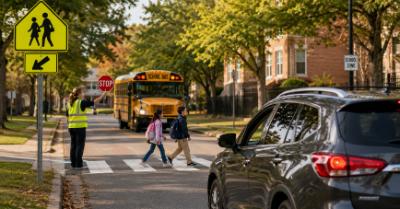
School arrival and dismissal periods bring cars, buses, pedestrians, bicyclists, crossing guards, and teen drivers into a limited area. Traffic may stop suddenly. Visibility may be reduced. Drivers may also be watching for children, pickup instructions, buses, parking spaces, and turning vehicles at the same time.
Tennessee Code section 55-8-136 requires drivers to exercise due care to avoid collisions and to take proper precautions when they observe a child on the roadway. The statute also requires drivers to operate at a safe speed, maintain a safe lookout, keep the vehicle under proper control, and devote full attention to driving.
A driver who is traveling below the posted speed limit can still be negligent if that speed is unsafe for crowded conditions. A driver who has the right of way can also create liability by failing to watch for a child or pedestrian who is plainly visible.
A school zone crash may involve more than one insurance policy and more than one legally responsible party. Identifying each potential source of liability can affect how a claim is investigated and valued.
The Driver Who Caused the Crash
The driver whose careless conduct caused the collision is often the first party investigated.
Examples of unsafe driving can include:
- Speeding or driving too fast for school traffic
• Looking at a phone or becoming distracted
• Following too closely in a pickup line
• Backing without checking for children, pedestrians, or vehicles
• Failing to yield at a crosswalk
• Passing a stopped school bus when Tennessee law requires a stop
• Driving while impaired
• Driving while dangerously fatigued
Tennessee Code section 55-8-151 generally requires a motorist who meets or overtakes a stopped school bus that is receiving or discharging children to stop before reaching the bus. The driver must remain stopped until the statutory conditions for proceeding are met. The law includes exceptions for certain separated roadways and controlled-access highways.
Breaking a traffic safety rule can become part of the liability analysis, but it does not automatically resolve every civil claim. You still need evidence connecting the unsafe conduct to the collision and the resulting injuries or losses.


A Parent, Student Driver, Rideshare Driver, or Other Motorist
A school zone crash is not always caused by a driver who is simply passing through the area. A parent entering a pickup lane, a teen leaving school, a rideshare driver, or another motorist may be responsible.
A common example is a rear-end collision in a pickup line. The following driver may be liable for failing to leave enough stopping distance, but the surrounding facts still matter. A lead driver could reverse unexpectedly, make an unsafe maneuver, or create another hazard.
Useful evidence can include:
- School or business surveillance video
• Witness statements
• Vehicle damage patterns
• Dash camera footage
• Vehicle event data when available
• Photographs of the pickup lane, intersection, or roadway
When a child or parent is struck while walking, the analysis may focus on sight lines, crosswalk use, traffic controls, turning movements, and whether the driver maintained a proper lookout.
For related information about pedestrian injury cases, visit:
https://www.bestlawhb.com/chattanooga-pedestrian-accident-lawyers/

- Jeremy Forgey
- Chris Griffin
A School Bus Driver or Bus Operator
School buses can add another layer to the liability analysis because the bus may be owned or operated by a governmental entity, private contractor, or another organization.
A school bus driver may be responsible when negligent driving contributes to a collision. Potential issues can include:
- Unsafe turns
• Driver distraction
• Excessive or unsafe speed
• Failure to use required safety equipment
• Unsafe loading or unloading practices
• Failure to maintain a proper lookout
The organization operating the bus may also require investigation. Depending on the facts, the claim may involve questions about driver training, supervision, vehicle ownership, maintenance, route procedures, and whether the driver was acting within the scope of employment.
For more information about bus-related injury claims, visit:
https://www.bestlawhb.com/chattanooga-bus-accident-lawyers/
An Employer May Share Responsibility
If the at-fault driver was working when the crash occurred, an employer may sometimes bear legal responsibility.
This issue can arise when the driver was operating a vehicle for work as a:
- Delivery driver
• Contractor
• Maintenance worker
• Commercial driver
• Bus operator
• Employee traveling as part of assigned duties
When a driver is acting within the scope of employment, the employer may be legally responsible under Tennessee law.
An employer may also face a separate claim for conduct such as negligent hiring, supervision, training, or entrustment when the evidence supports that theory.
Records that may help clarify employer responsibility include:
- Employment records
• Driver qualification records
• Training records
• Company policies
• Dispatch or route data
• Vehicle ownership records
• Internal incident reports
Common Mistakes in a Personal Injury Claim Choosing a Personal LawyerRelated Videos
A Vehicle Owner May Be Different From the Driver
The driver and vehicle owner may be different people or organizations.
Vehicle ownership alone does not automatically make the owner liable for every crash. The owner may become relevant when the evidence supports a recognized basis for responsibility, such as negligent entrustment, an agency relationship, or another applicable legal theory.
For example, an investigation may examine whether an owner knowingly allowed an unsafe or unqualified driver to use the vehicle.
Ownership records and insurance information can also help identify additional coverage that may apply to the claim.
A Maintenance Provider May Be Liable for a Mechanical Failure
A school zone collision may involve a mechanical problem rather than driver conduct alone.
If brake failure, worn tires, steering problems, or another mechanical defect contributed to the crash, the investigation may need to examine the work performed on the vehicle.
Relevant evidence can include:
- Repair invoices
• Inspection records
• Maintenance schedules
• Tire records
• Brake service records
• Vehicle defect reports
• Parts replacement records
A maintenance company or service provider may become part of the liability analysis if negligent repair or maintenance contributed to the collision.
A Governmental Entity May Be Involved
Claims involving a public school bus, government employee, public roadway, traffic-control device, or other governmental property can involve different legal rules from an ordinary car accident claim.
Tennessee’s Governmental Tort Liability Act generally provides immunity to governmental entities but removes that immunity in specified circumstances.
Tennessee Code section 29-20-202 addresses injuries caused by the negligent operation of a motor vehicle by a government employee acting within the scope of employment.
Tennessee Code section 29-20-203 addresses certain claims involving defective, unsafe, or dangerous streets, highways, sidewalks, and traffic-control devices when the statutory requirements are satisfied.
Tennessee Code section 29-20-205 addresses certain injuries caused by negligent acts or omissions of government employees, subject to statutory exceptions.
Government claims can involve different procedures, defenses, deadlines, and damages limits. If a public school bus, roadway condition, traffic signal, sign, crossing area, or government employee may have contributed to your crash, identifying the proper defendant early can be important.
How Tennessee Comparative Fault Can Affect a School Zone Claim
More than one person or organization can share fault for a Chattanooga school zone accident.
Tennessee follows a modified comparative fault system. A person who is less than 50 percent at fault may recover damages, but the recovery is reduced by that person’s percentage of fault. A person found 50 percent or more at fault generally cannot recover from the other party under this rule.
Comparative fault can become especially important in:
- Multi-vehicle crashes
• Pedestrian collisions
• School bus accidents
• Pickup-line crashes
• Intersection collisions
• Crashes involving employers or commercial vehicles
One insurer may blame another driver. A driver may blame a pedestrian. A bus operator may argue that another motorist created the danger. A vehicle owner may dispute responsibility for the driver’s actions.
The goal is to identify each contributing act and support the liability analysis with evidence rather than assumptions.
What Evidence Can Help Identify Who Is Liable?
School zone evidence can disappear quickly. A school or nearby business may overwrite surveillance footage. A damaged vehicle may be repaired. Witnesses may become more difficult to locate.
When you can do so safely, useful evidence may include:
- Photographs of the vehicles, roadway, signs, crosswalks, and bus position
• Contact information for witnesses
• School surveillance video
• Bus camera footage
• Traffic camera footage
• Dash camera footage
• Nearby business security video
• Police and crash reports
• Vehicle event data when available
• Bus route records
• Bus inspection and maintenance records
• Vehicle repair records
• Employment and dispatch records
• Medical records and bills
• Documentation of missed work and other losses
• Insurance and ownership information for every involved vehicle
Preserving evidence can be especially important when several drivers, employers, vehicle owners, contractors, or governmental entities may share responsibility.
For more information about injury claims in Chattanooga, visit:
https://www.bestlawhb.com/chattanooga-personal-injury-attorneys/
Talk With a Chattanooga Car Accident Attorney
A school zone crash can leave you dealing with medical care, transportation problems, missed work, school absences, and insurance questions at the same time. You should not have to determine on your own whether a driver, employer, vehicle owner, bus operator, maintenance provider, insurer, or governmental entity may be responsible.
Best and Brock represents injured people in Chattanooga, Hamilton County, East Tennessee, and nearby areas. The firm offers experienced litigators, careful case investigation, accessible communication, and client-focused service in personal injury matters.
If you were injured in a school zone car accident, call 423-829-1043 or visit:
https://www.bestlawhb.com/contact-us/
A case review can help you understand the available evidence, Tennessee fault rules, applicable insurance coverage, and possible next steps.
This article is for informational purposes only and is not legal advice. Consult an attorney about your specific situation.

|
|
|