
Football season can turn an ordinary Saturday into a long day of tailgates, watch parties, restaurant stops, crowded parking areas, and late-night driving. In Tennessee, game-day DUI charges are handled under the same DUI laws that apply throughout the year. You can face a DUI allegation based on impairment by alcohol, drugs, or another substance, or based on a qualifying blood or breath alcohol concentration. A football weekend does not reduce the State’s burden of proof, and an arrest is not a conviction.
Best and Brock represents people facing DUI charges in Chattanooga, Hamilton County, Southeast Tennessee, and nearby areas. If you were arrested after a football game, tailgate, restaurant visit, or watch party, the reason for the stop, roadside testing, chemical testing, refusal allegations, video, witness accounts, and your statements can all affect how the case should be reviewed.
A game-day DUI case should be reviewed as a timeline, not as one test score or one officer observation.






Why Football Season Can Complicate DUI Evidence 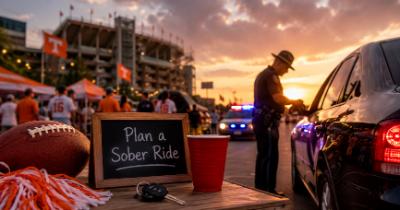
Football weekends can create traffic and roadside conditions that make a DUI investigation more fact-specific. You may be driving in stop-and-go traffic, following temporary traffic directions, looking for a rideshare pickup area, yielding to pedestrians, leaving a crowded parking lot, or taking an unfamiliar route home.
Those circumstances do not excuse impaired driving. They can still affect what an officer saw and why the officer decided to make a stop. A sudden brake in a packed pedestrian area may have a different explanation from the same movement on an empty road. Balance or coordination observations can also look different on sloped pavement, gravel, wet surfaces, or a noisy roadside after hours at a game.
Your defense should focus on the full sequence of events, including traffic conditions, road design, lighting, officer instructions, body-camera footage, dash-camera footage, and any available third-party video.
For a related discussion of tailgating-season mistakes, visit:
https://www.bestlawhb.com/tennessee-tailgating-season-dui-charges-common-mistakes/
What Tennessee DUI Law Covers on Game Day
Tennessee Code Annotated section 55-10-401 makes it unlawful to drive or be in physical control of a motor vehicle in covered locations while impaired by an intoxicant, marijuana, a controlled substance, a drug, another substance affecting the central nervous system, or a combination of substances when the impairment affects safe operation.
The statute also allows a DUI charge when your blood or breath alcohol concentration is 0.08 percent or more. When the vehicle is a commercial motor vehicle, the statutory threshold is 0.04 percent.
Football season does not create a separate DUI offense. The State still has to prove the required elements of the charge. Evidence may include driving behavior, officer observations, body-camera or dash-camera footage, your statements, field sobriety testing, breath or blood results, witness testimony, medical information, and other records.
For a broader explanation of DUI representation in Chattanooga, Tennessee, visit:
https://www.bestlawhb.com/chattanooga-dui-lawyers/


A DUI Charge Can Involve Alcohol, Drugs, or Medication
A game-day DUI investigation is not limited to beer, wine, or mixed drinks. Tennessee DUI law can apply when the State alleges that marijuana, a controlled substance, prescription medication, over-the-counter medication, another drug, or a combination of substances impaired your ability to drive safely.
A valid prescription does not automatically prevent a DUI charge. When medication is involved, your lawyer may review the prescribed instructions, dose timing, medical history, officer observations, toxicology results, other substances detected, and whether the evidence supports an actual impairment claim.
The presence of a substance and proof of impairment are related issues, but they are not always the same question. The evidence should be reviewed in context.
Game-Day Traffic Stops Still Need a Lawful Basis
A football game does not give police broader authority to stop drivers without a lawful basis. Depending on the circumstances, an officer may rely on an observed traffic violation, reasonable suspicion of criminal activity, a collision investigation, a checkpoint conducted under applicable legal rules, or another recognized basis for the encounter.
If you were stopped after a game or tailgate, write down the route, exact location, traffic pattern, lane markings, temporary signs, officer directions, lighting, weather, nearby pedestrians, and anything unusual about traffic control. Those details may help your attorney compare the officer’s report with available video and other evidence.
Do not rely only on memory if digital records are available. Save maps, parking receipts, rideshare records, photographs, messages, and location-history information before they are deleted or overwritten.
For more information about suspected DUI stops, visit:
https://www.bestlawhb.com/rights-when-pulled-over-for-suspected-dui/

- Jeremy Forgey
- Chris Griffin
How Roadside Sobriety Testing Should Be Reviewed
During a suspected DUI stop, an officer may ask you to perform field sobriety exercises. These exercises can involve balance, divided attention, coordination, eye movements, and the ability to follow instructions.
Roadside performance can be affected by circumstances unrelated to alcohol or drugs, including:
- Uneven, sloped, or damaged pavement
• Footwear
• Old injuries or medical conditions
• Fatigue after a long day
• Passing traffic
• Flashing emergency lights
• Noise from nearby crowds
• Weather conditions
• Confusing or incomplete instructions
• Anxiety during a police encounter
Those factors do not automatically invalidate field sobriety evidence. They are part of the circumstances that should be compared with the officer’s instructions, scoring, report, and video.
Best and Brock provides more information about roadside sobriety testing at:
https://www.bestlawhb.com/roadside-sobriety-tests/
Breath, Blood, Oral Fluid, and Refusal Issues Can Affect the Case
Tennessee’s implied consent law addresses breath and blood testing under conditions set by statute, and current law also permits oral fluid testing in specified circumstances. A refusal issue can create a driver’s-license consequence that is separate from the criminal DUI charge.
A 2025 Tennessee law that took effect on January 1, 2026, increased the revocation period to one year and six months for a person with no qualifying prior conviction who is suspected of misdemeanor DUI and refuses a law enforcement officer’s request for a blood test. Other refusal situations can carry different consequences, so the exact test requested, prior record, charge, and date matter.
Chemical-testing evidence is not automatically beyond review. A lawyer may examine whether the test was lawfully requested or obtained, whether statutory procedures were followed, how a sample was collected and stored, whether laboratory or instrument records support the reported result, whether a warrant or another legal basis was used, and whether the timing of the sample affects the State’s theory.
If your paperwork mentions refusal or implied consent, keep every notice and discuss the license consequences with a lawyer. Do not assume that the criminal court date is the only issue that needs attention.
For more information about Tennessee implied consent, visit:
https://www.bestlawhb.com/what-does-implied-consent-mean-in-tennessee/
Penalties for a DUI Conviction Cost of a DUI LawyerRelated Videos
What Penalties Can Follow a Tennessee DUI Conviction?
For an ordinary first DUI conviction in Tennessee, the statute requires at least 48 consecutive hours of confinement and allows a sentence of up to 11 months and 29 days. The fine for a first offense is $350 to $1,500. A first DUI conviction also results in a one-year prohibition from driving in Tennessee, subject to laws governing restricted driving privileges.
If a first DUI conviction involves a blood alcohol concentration of 0.15 percent or more, the minimum period of confinement increases to seven consecutive days. Repeat DUI convictions can bring longer mandatory confinement, higher fines, longer driving restrictions, felony exposure in later-offense cases, and other consequences.
Depending on the facts and sentence, a DUI conviction may also involve probation, alcohol or drug education or treatment, ignition interlock requirements, monitoring, court costs, insurance consequences, and transportation problems related to work, school, or family responsibilities.
The exact penalties depend on the offense level, prior record, test results, passengers, injuries, other charges, and the law that applies to your case.
For a step-by-step look at the Tennessee DUI court process, visit:
https://www.bestlawhb.com/chattanooga-dui-lawyers/tennessee-dui-process/
What Should You Do After a Football-Weekend DUI Arrest?
The period after release is a good time to preserve accurate information and organize the records that may matter later.
- Keep the citation, bond paperwork, testing documents, tow records, property receipts, and court notices.
• Save parking records, restaurant receipts, rideshare records, photographs, videos, text messages, and location history.
• Write a private timeline while your memory is fresh.
• Record the names and contact information of passengers and other potential witnesses.
• Preserve digital records without editing or deleting them.
• Follow every bond and release condition.
• Avoid posting about the arrest, officer, testing, or events of the night on social media.
• Attend every required court date.
• Speak with a DUI defense attorney before making a major decision about a plea or detailed statement.
You can review common DUI questions at:
https://www.bestlawhb.com/dui-frequently-asked-questions/
How a DUI Lawyer Can Review a Game-Day Arrest
A football-season DUI case may involve evidence from several sources. Police video can show the driving or roadside encounter. Businesses, parking facilities, stadium-area properties, or nearby homes may have surveillance footage. Friends may have photographs, videos, or messages that help establish timing. Receipts and location records may help reconstruct when you arrived, ate, left, or arranged transportation.
A DUI lawyer can compare those records with the officer’s account and testing evidence. The review may address the legal basis for the stop, the length and scope of the detention, probable cause for arrest, field sobriety instructions and scoring, chemical testing, implied consent warnings, witness credibility, medical conditions, medication use, and whether video supports or conflicts with the written report.
Attorney Matt Brock is a certified instructor in DUI Detection and Standardized Field Sobriety Testing. That training can be relevant when Best and Brock reviews how roadside exercises were instructed, administered, scored, and described.
Learn more about Matt Brock at:
https://www.bestlawhb.com/attorney-matt-brock/
Talk With a Chattanooga DUI Lawyer
A DUI arrest after a football game can affect your driving privileges, work, school, finances, and family responsibilities. You deserve a clear explanation of the evidence, the court process, and the legal options that may apply before you make decisions with lasting consequences.
Best and Brock represents people facing DUI charges in Chattanooga, Hamilton County, Southeast Tennessee, and nearby areas. The firm can review the traffic stop, available video, field sobriety evidence, breath or blood testing, refusal issues, court paperwork, and possible defenses. Matt Brock’s impaired-driving training includes certification as an instructor in DUI Detection and Standardized Field Sobriety Testing.
Call 423-829-1043 or request a consultation at:
https://www.bestlawhb.com/contact-us/
This article is for general informational purposes only. It is not legal advice, does not create an attorney-client relationship, and should not replace advice from an attorney about your specific situation.

|
|
|