
Rainy fall weather can make Chattanooga, Tennessee, roads more hazardous by reducing tire traction, limiting visibility, and increasing the distance you need to stop. Wet leaves, standing water, earlier darkness, road spray, and sudden downpours can create added risks on heavily traveled routes such as I-24, I-75, US-27, Hixson Pike, Brainerd Road, and Signal Mountain Road. If another driver fails to slow down, keep a safe following distance, or maintain control for the conditions, a wet-weather crash may support a negligence claim.
A rain-related collision can leave you managing medical care, vehicle repairs, missed work, and insurance questions at the same time. Best and Brock helps injured people in Chattanooga and nearby East Tennessee communities understand what evidence matters, how Tennessee fault rules may affect a claim, and what steps may protect the ability to pursue compensation.
Rain can make the road harder to control, but it does not remove a driver’s duty to use reasonable care.







Why Fall Rain Changes Driving Conditions in Chattanooga 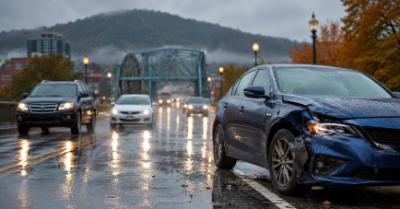
Fall weather in Chattanooga can bring rain, shorter daylight, changing temperatures, and leaf debris. The area also includes interstate traffic, steep grades, curves, bridges, ramps, and busy neighborhood roads. When rain arrives during morning or evening traffic, you may have less time to react to sudden braking, lane changes, pedestrians, stalled vehicles, or debris.
Water on a windshield can make signs, lane markings, brake lights, and nearby vehicles harder to see. Headlights and traffic signals can also reflect from wet pavement after sunset, which can make the roadway more difficult to read.
A speed that feels reasonable on a dry afternoon may be unsafe when the same road is covered with water or leaves. Safe driving depends on the conditions in front of you, not only the posted speed limit.
Wet Leaves Can Reduce Traction on Chattanooga Roads
Wet leaves can create a slick layer between tires and pavement, especially during braking, turning, or sudden lane changes. Leaves can also cover lane markings, potholes, drainage areas, and the edge of the road.
Reduced traction can make common driving mistakes more serious. A driver who follows too closely or enters a curve too fast may have less room to correct the vehicle before a rear-end collision, sideswipe, or loss-of-control crash occurs.
When fall rain and leaves are present, you should allow more space to stop and avoid abrupt steering, braking, or acceleration.


Standing Water and Hydroplaning Can Lead to Loss of Control
Heavy rain can create standing water in low spots, ramps, shoulders, and travel lanes. Hydroplaning occurs when tires lose enough contact with the pavement that steering and braking become much less effective.
A driver who enters pooled water too quickly may drift into another lane, strike another vehicle, hit a barrier, or leave the roadway. Higher speeds can increase the risk, but hydroplaning can occur at lower speeds when road, tire, and water conditions combine.
If you are driving in heavy rain, reducing speed and increasing following distance can give you more time to respond. Cruise control is generally a poor choice when traction is uncertain because direct control over acceleration is important. Tires, windshield wipers, headlights, and other safety equipment should also be in working condition.
Why Rear-End and Lane-Change Crashes Become More Likely in Rain
Rain can expose unsafe driving habits that may not cause a collision on dry pavement. Following too closely is one example. When the vehicle ahead brakes suddenly, a driver behind it may discover that the usual following distance is not enough on a wet road.
Lane changes can also become more dangerous. Side mirrors and windows may be covered with water, road spray can hide nearby vehicles, and lane markings may be harder to see. A driver who changes lanes without confirming that the path is clear can cause a sideswipe or force another vehicle toward a shoulder, barrier, or adjacent lane.
Drivers who continue at normal dry-weather speeds during a downpour may also have less time to react. Tennessee drivers are expected to use reasonable care based on the conditions around them.

- Jeremy Forgey
- Chris Griffin
What Tennessee Law Means After a Rainy-Weather Car Accident
Rain does not decide fault by itself. Liability usually depends on what each driver did before the collision. Evidence may show that a driver was traveling too fast for conditions, following too closely, making an unsafe lane change, failing to keep a proper lookout, or driving with equipment that was not functioning correctly.
Tennessee follows a modified comparative fault system. If you are less than 50 percent at fault, any damages you recover can be reduced by your percentage of fault. If you are found 50 percent or more at fault, you generally cannot recover damages from another at-fault party.
Tennessee also places strict deadlines on many injury claims. Under Tennessee Code Annotated § 28-3-104, many personal injury actions must be filed within one year after the cause of action accrues, subject to statutory exceptions. A longer period may apply in certain circumstances, including some cases involving criminal charges.
For more information about Tennessee filing deadlines after a car accident, visit:
https://www.bestlawhb.com/how-long-do-i-have-to-sue-someone-after-a-car-accident/
Waiting can also make it harder to preserve photographs, video, witness information, vehicle evidence, and other proof.
What Evidence Can Help Show What Happened
Weather-related crashes often require more than a statement that the road was wet. The key question is whether someone failed to respond reasonably to the conditions.
Useful evidence may include:
- Photos or video of standing water, wet leaves, lane markings, vehicle damage, and the wider crash scene
- Dash camera footage from your vehicle or another vehicle
- Traffic camera or nearby business camera footage when available
- Witness names and contact information
- The responding officer’s report
- Medical records connecting your injuries to the collision
- Repair estimates and photographs of vehicle damage
- Information about tire condition, lights, windshield wipers, or other vehicle equipment when relevant
- Insurance correspondence and claim records
- Work records that document missed time or lost income
If you can do so safely, documenting the road soon after the collision may be useful because rain, traffic, cleanup, and drainage can change the scene quickly.
For practical steps to take after a Tennessee collision, visit:
https://www.bestlawhb.com/what-do-i-do-if-ive-been-in-a-car-accident/
Tennessee Code Annotated § 55-10-106 requires immediate notice to law enforcement after a crash involving injury, death, or apparent property damage of $50 or more.
Common Mistakes in a Personal Injury Claim Choosing a Personal LawyerRelated Videos
What to Do After a Chattanooga Car Accident in the Rain
Your first priority is safety and medical care. Move out of active traffic if you can do so safely. Call 911 when emergency help is needed, and follow the instructions of responding officers or emergency personnel. Do not stand in a traffic lane to take photographs.
After the immediate danger has passed:
- Exchange contact and insurance information with the other driver
- Identify witnesses and collect their contact information
- Photograph vehicle damage, the roadway, wet leaves, standing water, and nearby traffic controls if you can do so safely
- Avoid arguing about fault at the scene
- Seek medical evaluation if you are injured or develop symptoms
- Keep copies of medical bills, treatment instructions, work notes, repair records, rental expenses, and insurance correspondence
- Save photographs, video, dash camera footage, and messages related to the crash
A calm, detailed record of what happened is usually more useful than a roadside argument about responsibility.
You can also review these Chattanooga injury resources:
https://www.bestlawhb.com/chattanooga-car-accident-attorneys/
https://www.bestlawhb.com/chattanooga-personal-injury-attorneys/
How a Car Accident Attorney Can Help With a Wet-Weather Claim
A rainy-weather crash can create disputes about what caused the collision. An insurer may argue that weather conditions caused the wreck, that both drivers share fault, or that the injuries were not caused by the impact. A car accident attorney can review the evidence and evaluate whether unsafe driving choices contributed to the crash.
Legal work may include:
- Investigating the crash scene and roadway conditions
- Collecting available photographs and video
- Locating and interviewing witnesses
- Reviewing police and crash reports
- Examining available insurance coverage
- Organizing medical records and bills
- Documenting lost income and other claimed losses
- Communicating with insurance companies
- Evaluating settlement offers
- Preparing a case for litigation when court proceedings are appropriate
Best and Brock brings decades of legal experience and experienced litigators to people facing serious legal problems in Chattanooga, Southeast Tennessee, Hamilton County, North Georgia, and nearby areas. Every case depends on its own facts, so the appropriate strategy begins with a careful review of the collision, injuries, available evidence, and insurance coverage.
Talk With a Chattanooga Car Accident Lawyer After a Rain-Related Crash
If you were injured in a Chattanooga-area car accident during rainy fall weather, you can speak with Best and Brock about the facts of the collision, Tennessee fault rules, filing deadlines, available evidence, and possible next steps. The firm serves clients in Chattanooga, Southeast Tennessee, Hamilton County, North Georgia, and nearby areas.
Call 423-829-1043 or visit:
https://www.bestlawhb.com/contact-us/
This article is for informational purposes only and is not legal advice. Every case is different. Consult an attorney about your specific situation.

|
|
|