
When an out-of-state driver causes a summer road trip accident in Tennessee, the at-fault driver may be liable under Tennessee personal injury law even if they live elsewhere. Your claim depends on where the crash happened, what insurance applies, how fault is divided, and whether another party, such as an employer or commercial carrier, contributed to the collision. Tennessee uses modified comparative fault, which can reduce or bar recovery based on each driver’s share of fault. Tennessee also generally gives injured people one year to file a personal injury lawsuit under Tenn. Code Ann. § 28-3-104, so evidence should be protected quickly after a crash near Chattanooga, I-75, I-24, Highway 27, or other busy summer routes.




Summer Road Trips Bring More Out-of-State Drivers Through Tennessee 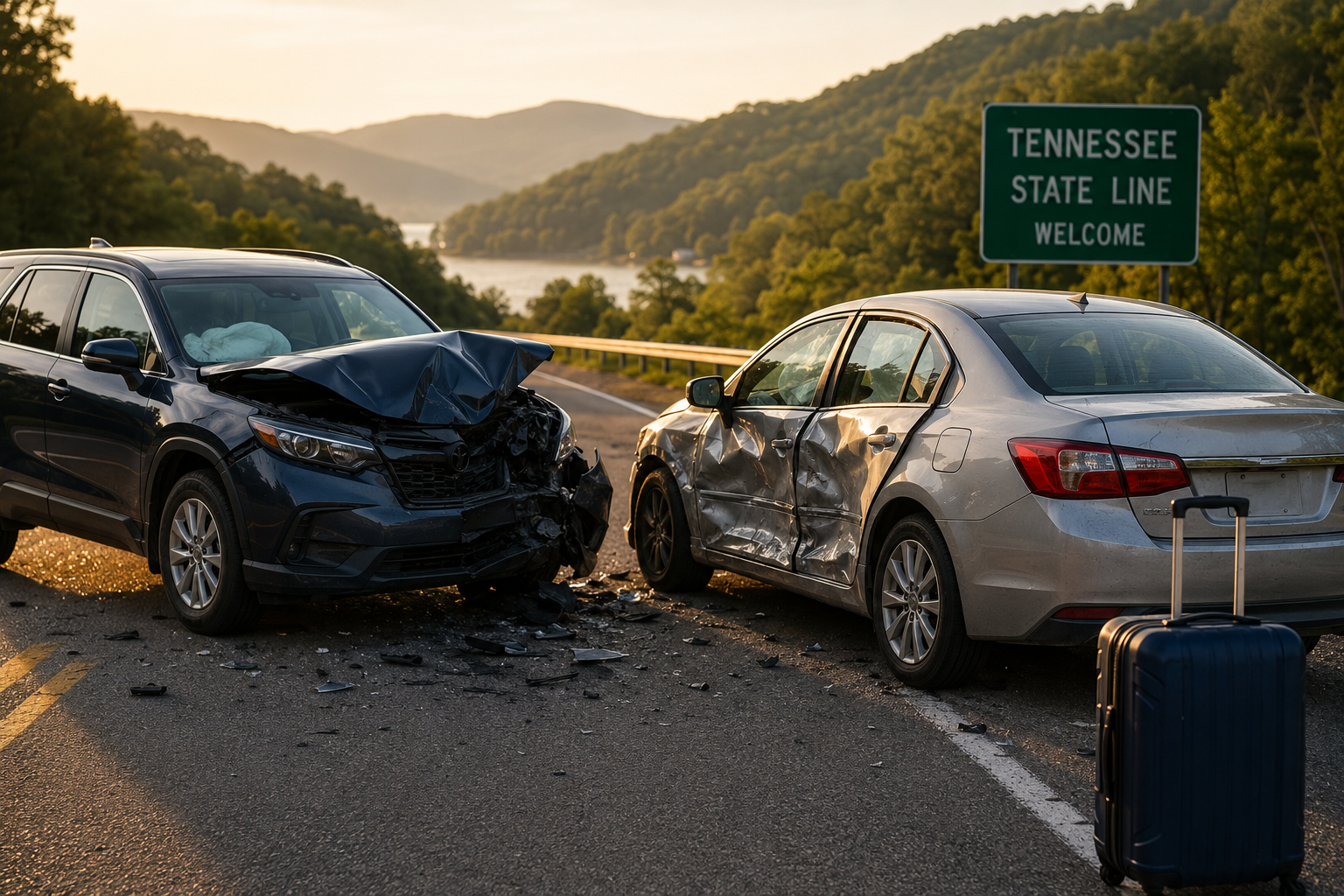
Tennessee sees heavy seasonal travel during the summer. Families drive through Chattanooga on the way to the Smokies, Atlanta, Nashville, Gulf Coast beaches, lakes, and mountain destinations across East Tennessee. Local drivers often share the road with tourists, college students, rental car users, rideshare drivers, and commercial vehicles from Georgia, Alabama, Florida, North Carolina, Kentucky, and beyond.
A crash with an out-of-state driver can feel more confusing than a local wreck. You may wonder whether Tennessee law applies, whether their insurance will cooperate, and whether the driver can go home and avoid responsibility. In most cases, a valid injury claim does not disappear when the other driver crosses a state line.
If the crash happened in Hamilton County, Bradley County, Marion County, or another Tennessee county, Tennessee law usually controls key parts of the claim. Best and Brock helps injured people understand those rules and deal with the problems that often come with out-of-state insurance claims.
Who Is Liable When an Out-of-State Driver Causes a Crash?
The most direct answer is that the out-of-state driver may be liable if their negligence caused the crash. Negligence means the driver failed to use reasonable care under the circumstances. On a summer road trip, common examples include:
Speeding through unfamiliar curves or construction zones
Following too closely in vacation traffic
Changing lanes without checking blind spots
Driving while tired after hours on the interstate
Looking at a phone, map app, or navigation screen
Driving under the influence of alcohol or drugs
Failing to yield at intersections, ramps, or tourist-heavy exits
Tennessee law does not give visitors a different standard. Drivers who enter Tennessee must follow Tennessee traffic laws and operate safely. A driver from another state can be held financially responsible for medical bills, lost wages, pain and suffering, vehicle damage, and other losses if the evidence shows they caused the collision.


When More Than One Party May Be Responsible
Summer road trip accidents are not always simple two-car crashes. Liability can expand depending on the facts.
A rental car company may become relevant if the at-fault driver was using a rental vehicle, although rental company liability depends on the facts and legal limits.
An employer may be involved if the out-of-state driver was working at the time of the crash. Delivery drivers, sales representatives, contractors, and truck drivers often cross state lines for business. If the driver was acting within the scope of employment, the employer’s insurance may be part of the claim.
A trucking company may be liable if the crash involved a commercial vehicle. Driver fatigue, improper loading, poor maintenance, and unrealistic delivery schedules can all affect liability. Related evidence may disappear quickly, including electronic logs and vehicle data. Best and Brock’s article on https://www.bestlawhb.com/the-importance-of-gathering-evidence-after-a-truck-accident/ explains why prompt evidence preservation can matter after a serious truck crash.
Does Tennessee Law Apply If the Driver Lives Somewhere Else?
If the crash happened in Tennessee, Tennessee law often controls the personal injury claim. The at-fault driver’s insurance policy may be issued in another state, but the collision still occurred on Tennessee roads. Insurance companies regularly handle claims across state lines, and a Tennessee attorney can usually communicate with an out-of-state insurer on your behalf.
How Tennessee Comparative Fault Can Affect Your Claim
Tennessee follows modified comparative fault. In plain terms, your recovery can be reduced by your percentage of fault. If you are found 50 percent or more at fault, you may be barred from recovering compensation.
This rule matters because insurance adjusters often try to shift blame. An out-of-state driver may claim that you were speeding, made a sudden stop, failed to signal, or contributed to the wreck in some other way. Even when that claim is weak, it can affect settlement talks.
Evidence can protect you from unfair blame. Helpful proof may include crash scene photos, police reports, witness names, dash camera footage, nearby camera footage, medical records, vehicle damage photos, phone records when distracted driving is suspected, and black box or electronic data in serious crashes.

- Jeremy Forgey
- Chris Griffin
What Insurance Applies After an Out-of-State Driver Crash?
The at-fault driver’s liability insurance is usually the first place to look. Most auto policies provide coverage when the insured driver travels into another state. If their policy limits are lower than Tennessee requirements, the policy may adjust to meet Tennessee minimums, depending on policy language and applicable law.
Other insurance may also matter:
Your uninsured or underinsured motorist coverage, if the at-fault driver has no insurance or not enough insurance
Medical payments coverage, if included in your own policy
Health insurance, which may pay treatment costs subject to reimbursement rights
Commercial insurance, if the at-fault driver was working
Rental car coverage, if a rental vehicle was involved
Insurance issues can become frustrating when multiple companies point fingers. One adjuster may say another policy applies. Another may demand recorded statements before you know the full extent of your injuries. Before speaking in detail with the other driver’s carrier, you may want to review Best and Brock’s article on https://www.bestlawhb.com/should-you-speak-to-the-other-drivers-insurance-company/.
What Should You Do After a Summer Crash With an Out-of-State Driver?
After any crash, your first priority is medical safety. Call 911 if anyone is hurt. Accept emergency care when needed. Some injuries, including concussions, back injuries, soft tissue damage, and internal injuries, may not feel severe at first.
Once you are safe, try to preserve key information:
Get the other driver’s license, insurance, and registration information
Photograph the license plate and any rental agreement details if visible
Take photos of the crash scene, road conditions, traffic signs, skid marks, and debris
Ask witnesses for contact information
Get the investigating agency and report number
Avoid arguing about fault at the roadside
Do not give a recorded statement without understanding your rights
Follow all recommended medical care
Keep receipts, discharge papers, and missed-work documentation
Best and Brock has a related resource on https://www.bestlawhb.com/immediate-steps-to-take-after-a-car-accident-in-tennessee/ that covers actions to take after a Tennessee crash.
What Damages Can You Seek?
A Tennessee car accident claim may include economic and non-economic damages. Economic damages are financial losses that can often be documented with bills, wage records, and receipts. Non-economic damages address the human impact of the crash.
Depending on your injuries, damages may include emergency care, ambulance bills, follow-up appointments, imaging, therapy, surgery, medication, lost income, reduced earning capacity, vehicle repair, pain, physical limitations, emotional distress, loss of enjoyment of normal activities, long-term disability, or scarring.
The value of a claim depends on evidence, diagnosis, treatment history, recovery outlook, insurance limits, and fault disputes. Best and Brock’s article on https://www.bestlawhb.com/how-to-calculate-the-value-of-your-tennessee-personal-injury-claim/ explains common factors that can affect valuation.
Common Mistakes in a Personal Injury Claim Choosing a Personal LawyerRelated Videos
The One-Year Deadline in Tennessee
Tennessee has a short personal injury filing deadline. Under Tenn. Code Ann. § 28-3-104, many personal injury lawsuits must be filed within one year after the injury. This deadline can surprise people from other states because some states allow more time.
Waiting can hurt your case before the legal deadline arrives. Skid marks fade. Vehicles get repaired. Tourists return home. Video footage may be deleted. Insurance companies may use gaps in medical care to question the seriousness of your injuries.
You can read more about timing in Best and Brock’s article on https://www.bestlawhb.com/how-long-do-you-have-to-file-a-tennessee-car-accident-claim/.
How a Local Attorney Can Help
A local Tennessee attorney can connect the legal rules to the real facts of your crash. That may include identifying insurance coverage, requesting records, preserving evidence, reviewing police reports, calculating damages, responding to blame-shifting, and negotiating with an out-of-state insurance company.
Best and Brock represents injured people in Chattanooga and East Tennessee. The firm offers a free consultation, and its team can help you understand what your next steps may look like after a crash with a visitor, tourist, or commercial driver.
Talk With a Chattanooga Car Accident Lawyer
A summer road trip should not leave you dealing with medical bills, missed work, and insurance confusion alone. If an out-of-state driver caused a crash in Tennessee, contact Best and Brock to discuss your options. A lawyer can help you understand the deadline, the insurance issues, and the evidence needed to protect your claim.
This article is for informational purposes only and is not legal advice. Consult an attorney about your specific situation.

|
|
|